
Check your dog
Notice how your dog is moving and behaving before starting. Look for stiffness, soreness, unusual tiredness or reluctance. Check the weather, trail surface and harness fit.
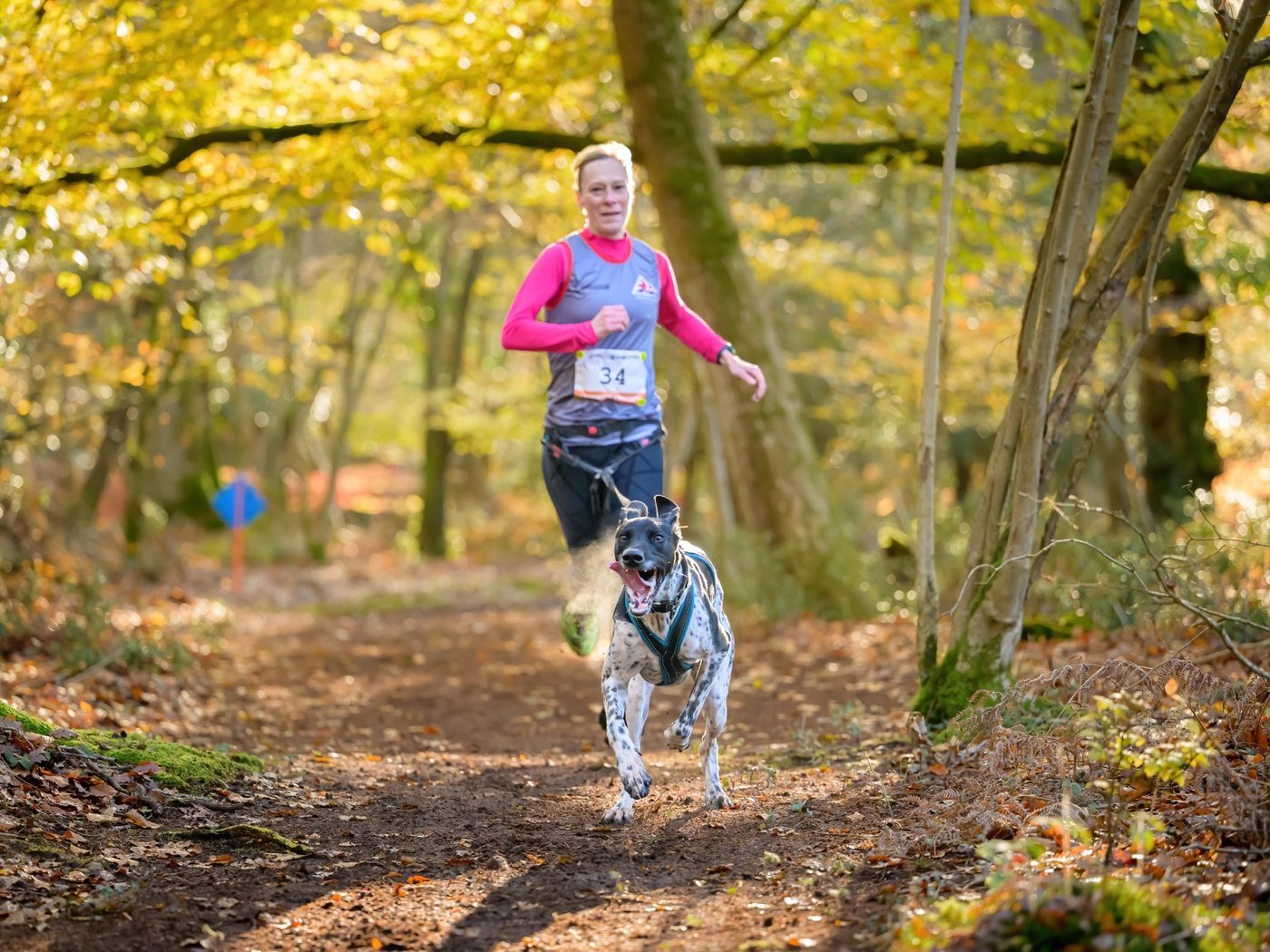
Give your dog a thoughtful start, a gradual finish and the freedom to tell you when something does not feel right.
Before your run After your runAs with human athletes, a dog benefits from a gradual transition between resting and energetic exercise. The exact routine depends on your dog, the activity and the conditions. These are general ideas for healthy dogs, not a substitute for personalised veterinary guidance.
Notice how your dog is moving and behaving before starting. Look for stiffness, soreness, unusual tiredness or reluctance. Check the weather, trail surface and harness fit.
Begin with relaxed walking on a lead, then progress to a purposeful walk or easy trot if your dog is comfortable. Increase effort gradually rather than sprinting straight from the car.
Give your dog time to settle into movement, listen to their signals and start the first section of your run under control. A warm-up is not a workout or a test of endurance.
For organised competition, allow extra preparation time. KI-5 Canine Therapy discusses pre-event preparation in the 10–20 minutes before activity, including qualified canine myotherapy techniques.
Once the faster work is done, let your dog return gradually to a comfortable, relaxed state.
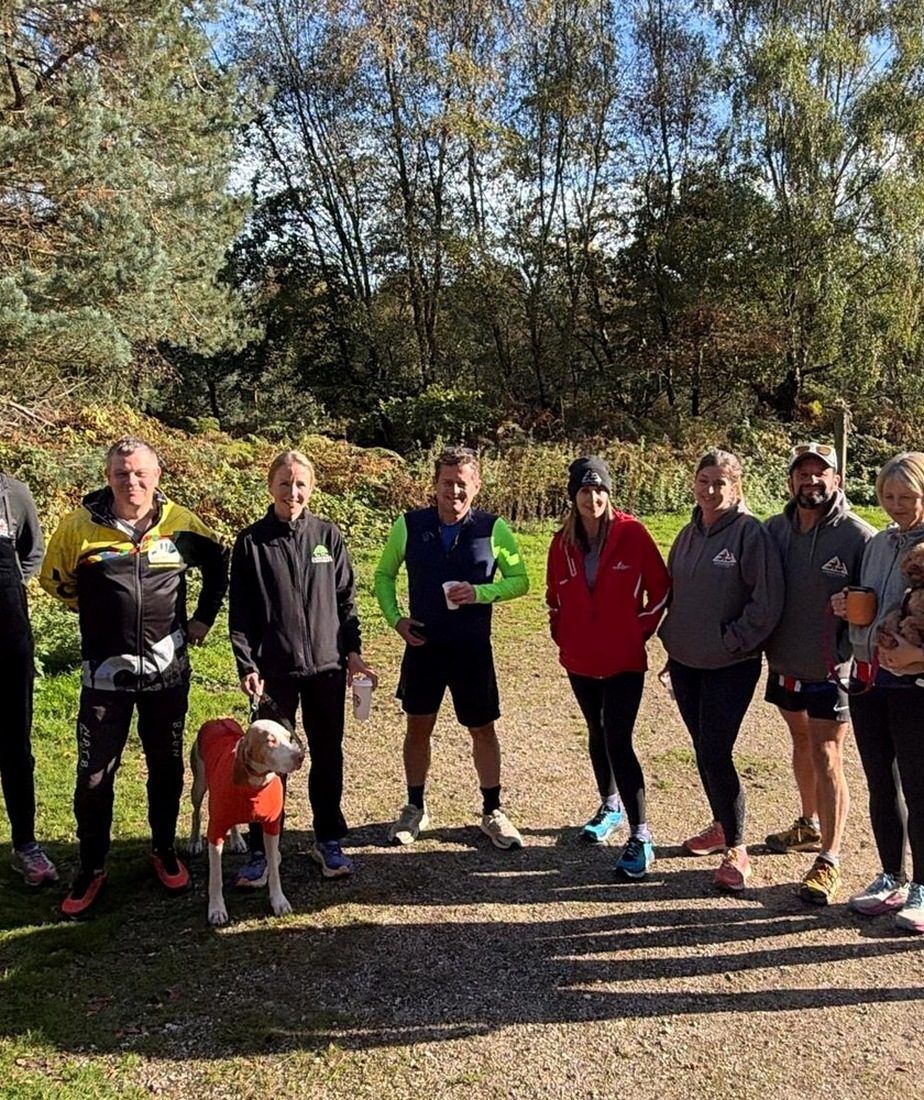
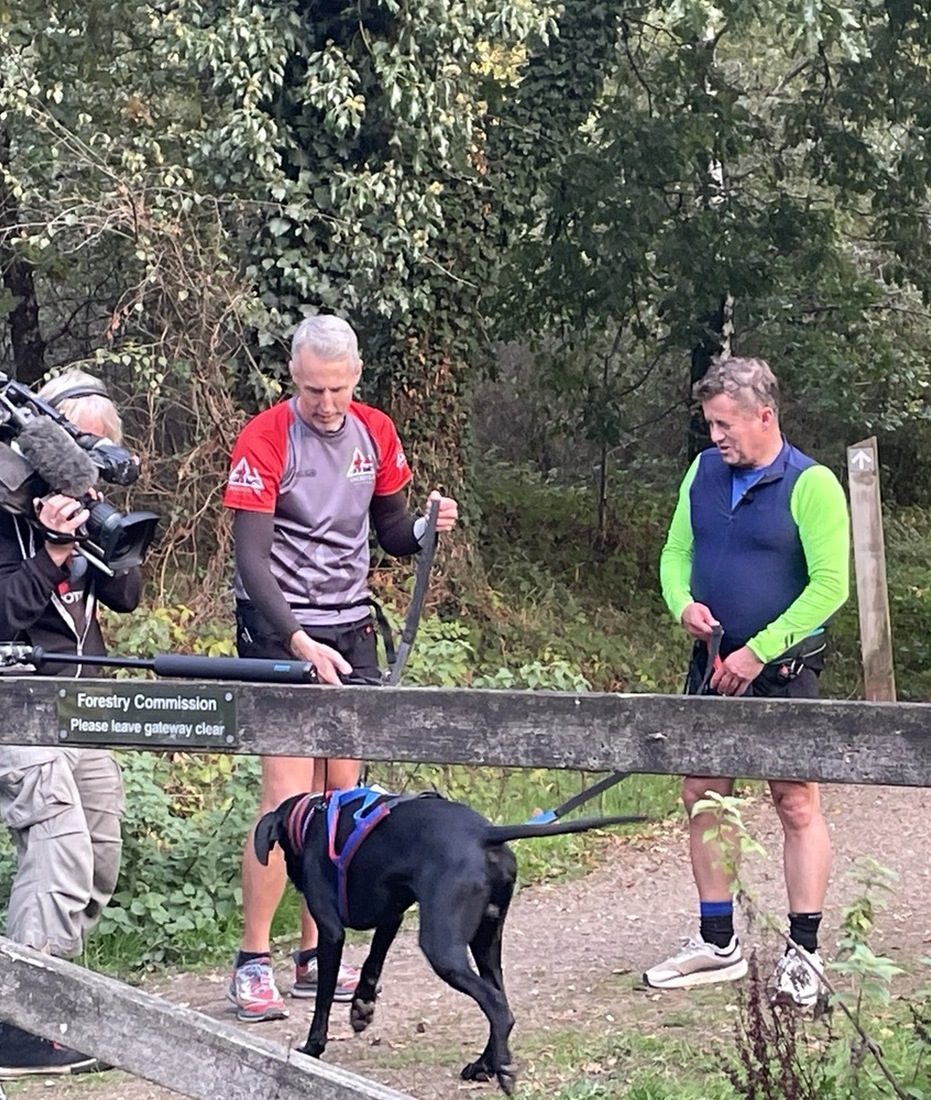
Age, fitness, prior injury, health conditions, temperature and the type of session all affect what is appropriate.
Keep the warm-up gradual and positive. Never force a stretch, manipulate a painful joint or perform deep massage without appropriate instruction from your vet or a suitably qualified canine rehabilitation professional.
For a dog returning from injury, or with persistent stiffness or discomfort, get an individual plan before returning to harness work.
The original Canicross UK warm-up and cool-down page highlights KI-5 Canine Therapy. Their specialist material covers sporting and working dogs, the value of preparation and post-event recovery, and Galen Myotherapy.
For hands-on canine massage, seek advice from a properly qualified practitioner and consult your vet where appropriate.
Explore KI-5's guidance ↗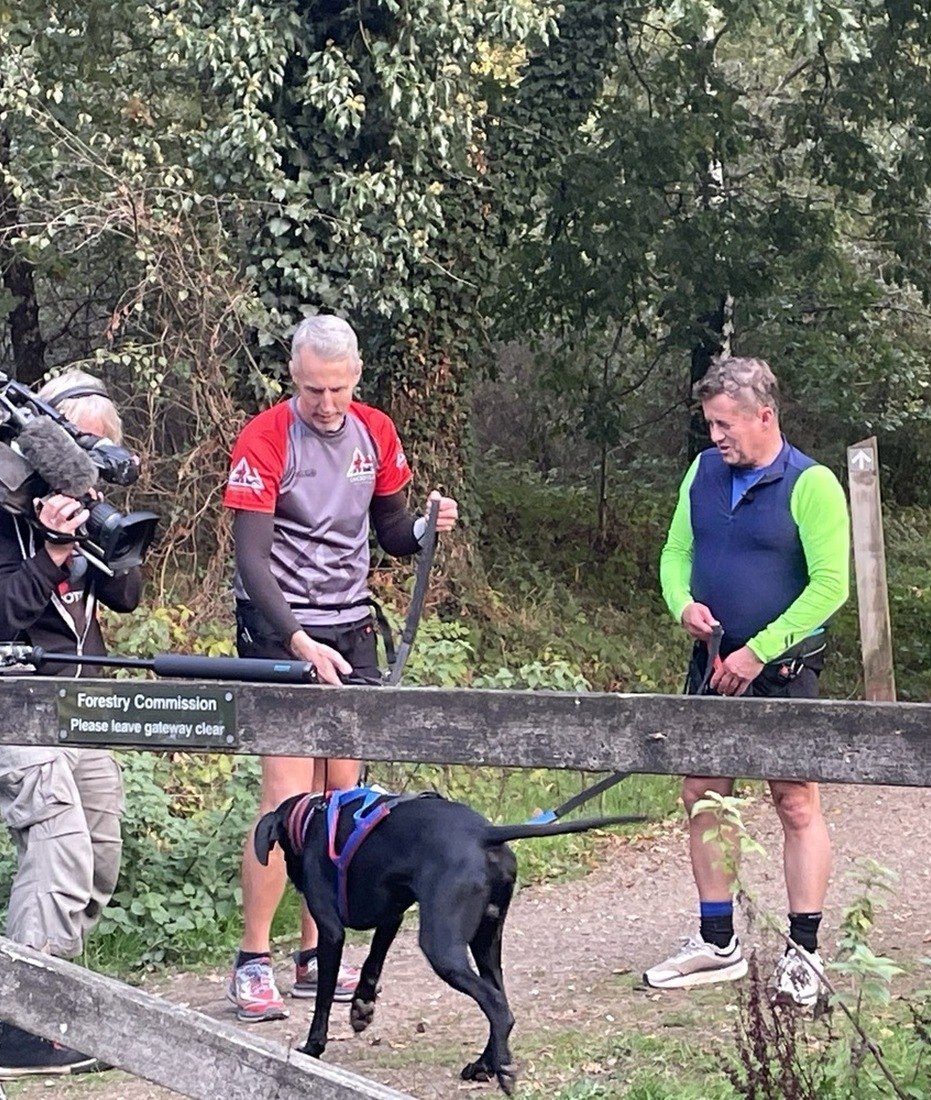
Source: CCUK's original warm-up and cool-down page · KI-5 Canine Therapy — sporting dogs. Additional routine suggestions are general educational guidance by CCUK and should be reviewed by a suitably qualified canine professional before publication.
The safest preparation is the one that suits the dog in front of you.
Yes. Start with gentle walking, then increase activity steadily if your dog is comfortable. Adjust the duration and pace to their fitness and the conditions.
Ease into a relaxed walk, monitor breathing and comfort, offer drinking water and check for sore paws or changes in movement. Cool the dog appropriately if heat is a concern, and seek veterinary help for concerning symptoms.
Do not force stretches or attempt deep massage without professional instruction. Ask your vet or a qualified canine rehabilitation practitioner for personalised guidance.
Learn safe equipment fitting, handling and dog-first canicross at a CCUK training session.